
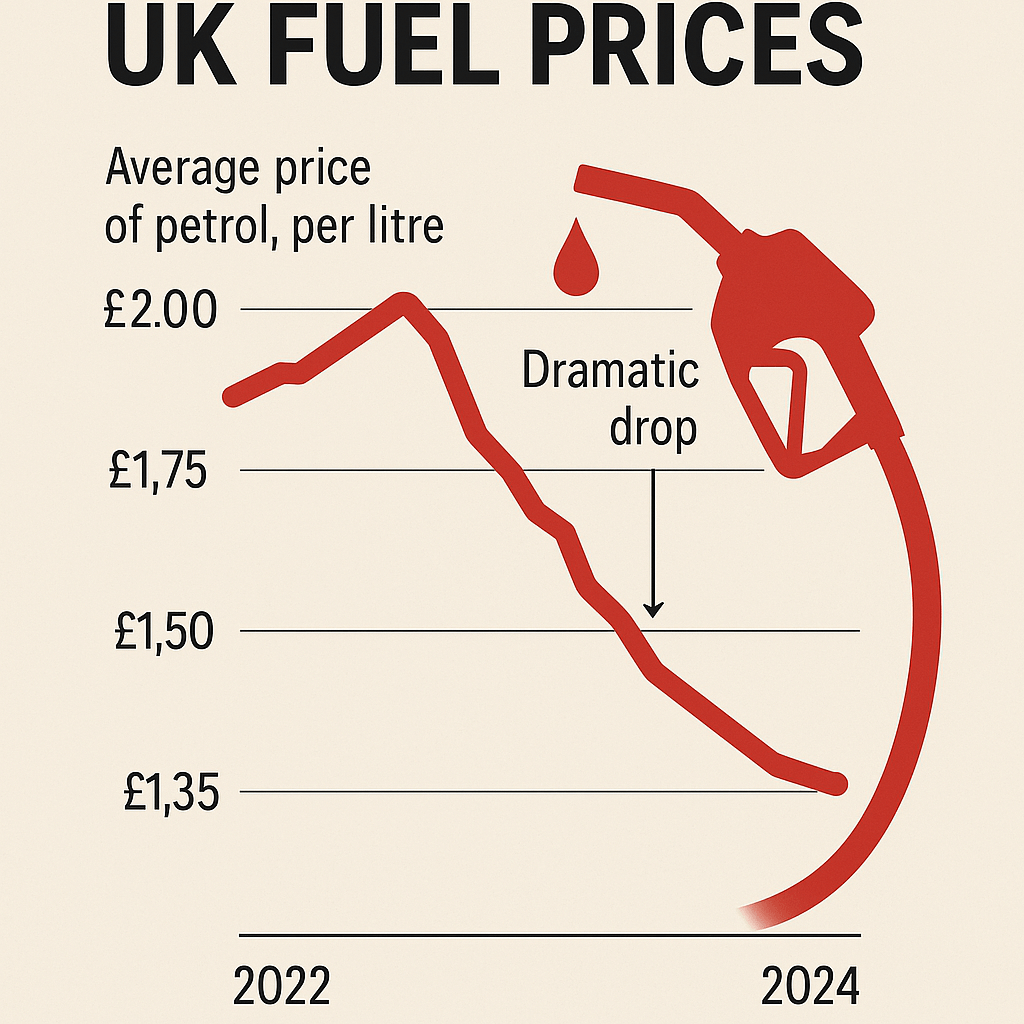
In recent months, UK motorists have experienced a significant and welcome decline in fuel prices, with petrol and diesel costs reaching their lowest levels in years. As of April 2025, the average price for a litre of unleaded petrol stands at approximately £1.35, a notable decrease from the highs of nearly £1.92 per litre observed in July 2022. This substantial reduction has provided much-needed relief to consumers who have faced escalating living costs.BBC+2BBC+2BBC News+2
Historical Context
To fully appreciate the current decline in fuel prices, it’s essential to understand the preceding fluctuations. In July 2022, petrol prices soared to unprecedented levels, driven primarily by the surge in global oil prices following Russia’s invasion of Ukraine. This geopolitical event disrupted global oil supplies, leading to Brent crude oil prices peaking at $139 a barrel, the highest in nearly 14 years. Consequently, UK motorists faced record-high fuel costs, significantly impacting household budgets. BBC NewsBBC+1BBC News+1
Factors Contributing to the Recent Decline
Several interrelated factors have contributed to the dramatic drop in fuel prices:
- Global Oil Price Reduction: A primary driver of the decrease in fuel prices is the significant fall in global oil prices. As of late 2024, Brent crude oil prices declined to around $75 per barrel. This reduction is largely attributed to decreased global demand, influenced by economic slowdowns in major economies and increased production from oil-producing nations. BBC
- Strengthening of the British Pound: The appreciation of the British pound against the US dollar has also played a crucial role. Since oil transactions are typically conducted in US dollars, a stronger pound allows UK fuel retailers to purchase oil at lower relative costs, leading to reduced prices at the pump. BBC+1BBC News+1
- Market Competition and Regulatory Oversight: Increased scrutiny from regulatory bodies, such as the Competition and Markets Authority (CMA), has highlighted concerns over fuel pricing practices. The CMA’s findings indicated that weakened competition in the fuel sector was impacting drivers’ wallets, prompting calls for fairer pricing. This has pressured retailers to pass on savings from lower wholesale costs to consumers more promptly. BBC+2BBC News+2BBC+2
- Economic Policies and Trade Dynamics: Recent geopolitical developments, including the imposition of tariffs by major economies, have influenced global trade dynamics. For instance, President Trump’s sweeping tariffs on over 60 countries led to significant market turmoil, affecting oil prices and contributing to their decline. Latest news & breaking headlines
Impact on Consumers and the Economy
The reduction in fuel prices has had a multifaceted impact on both consumers and the broader economy:
- Consumer Relief: Lower fuel costs have alleviated some financial pressure on households, allowing for increased disposable income and potentially boosting consumer spending in other sectors.
- Business Operations: Businesses that rely heavily on transportation and logistics have benefited from reduced operational costs, potentially leading to lower prices for goods and services and contributing to overall economic stability.
- Inflationary Effects: The decline in fuel prices has contributed to easing inflationary pressures, as transportation costs are a significant component of the Consumer Price Index (CPI). This development has provided some respite amid broader economic challenges.
Future Outlook
While the current trend in fuel prices is favorable, several factors could influence future movements:
- Global Economic Recovery: As economies recover from recent downturns, increased industrial activity could drive up oil demand, potentially leading to higher prices.
- Geopolitical Stability: Ongoing geopolitical tensions and policy decisions, such as international tariffs and trade agreements, will continue to impact global oil markets and, consequently, fuel prices.
- Environmental Policies: The UK’s commitment to reducing carbon emissions and transitioning to renewable energy sources may lead to policy changes affecting fuel taxation and consumption patterns, influencing future fuel prices.
Conclusion
The dramatic drop in UK fuel prices is the result of a complex interplay of global oil market dynamics, currency fluctuations, regulatory interventions, and geopolitical events. While this decline offers immediate benefits to consumers and businesses, it is essential to remain cognizant of the volatile nature of fuel prices and the various factors that can influence future trends. Staying informed and adaptable will be crucial for navigating the ever-changing landscape of fuel economics in the UK.